Sarees and kurtas are cherished Diwali gifts when the fabric, style and fit match the person who will wear them.
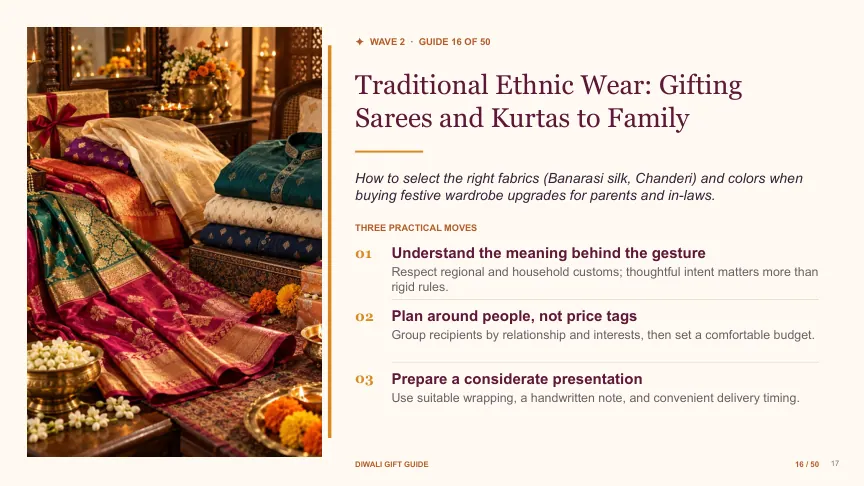
At a glance: How to select the right fabrics (Banarasi silk, Chanderi) and colors when buying festive wardrobe upgrades for parents and in-laws.
What to consider before you choose
Find out preferred colors, textile weight, drape and care needs. Banarasi silk and Chanderi can differ greatly in feel; a recipient's daily habits matter more than a prestige label.
A strong choice starts with the person receiving it: their interests, household routine, cultural preferences, delivery circumstances and your comfortable spending limit. Use the source slide as inspiration, then personalize the final decision rather than treating any idea as mandatory.
How to put the gift together
For kurtas, confirm sizing or provide an exchange option. For sarees, check length, blouse-piece inclusion, transparency and weaving or fabric details before purchase.
Before committing, compare at least two suitable options for quality, practicality and total cost. Check how the gift will arrive and whether a simple handwritten greeting would make it more meaningful.
Details and mistakes worth avoiding
Avoid guessing dimensions and buying restrictive festive outfits that cannot be exchanged. Verify fabric claims and laundering instructions.
Keep the recipient's convenience in mind. A gift that needs difficult storage, complex setup, uncomfortable reciprocation or uncertain delivery may create more work than joy. When you are unsure, ask politely or choose a flexible alternative.
One thoughtful gifting example
For parents, a breathable well-finished kurta or a classic saree in a known favorite color may be more appreciated than an elaborate surprise.
Add a brief message about the reason you chose it. That personal connection is often what makes the present memorable long after Diwali.
Three practical moves from the original slide
Preserved from slide 17 of the supplied presentation. These are the slide's general guiding points; the article above adapts them to this specific topic.
- Understand the meaning behind the gestureRespect regional and household customs; thoughtful intent matters more than rigid rules.
- Plan around people, not price tagsGroup recipients by relationship and interests, then set a comfortable budget.
- Prepare a considerate presentationUse suitable wrapping, a handwritten note, and convenient delivery timing.
Final thought
The right present does not need to be the most expensive or fashionable one. Take the ideas above as a starting point, respect the recipient's priorities and make the greeting genuine.
Editorial note: This article expands the original presentation topic with practical, general guidance. Product suitability, regional customs, legal requirements and availability should be checked for your circumstances. Source artwork remains credited to the supplied Diwali Gift Guide presentation.